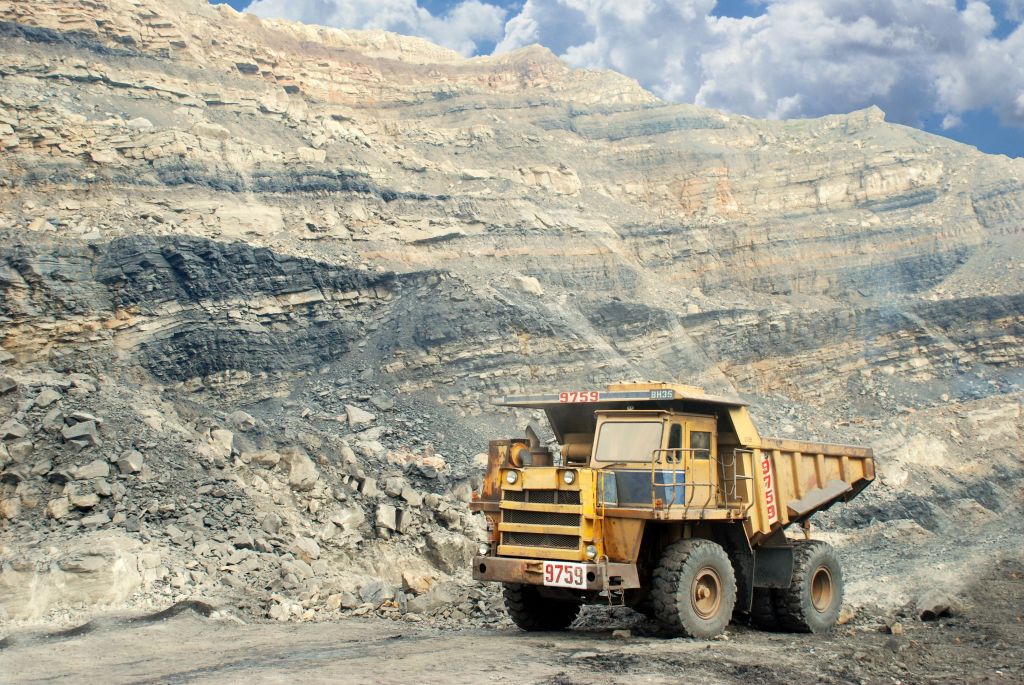
- 1987 Constitution
The provisions on mining in the 1987 Constitution of the Philippines are primarily found in Article XII (National Economy and Patrimony), establishing the State’s absolute ownership over mineral resources and its strict control over their exploitation.
* Regalian Doctrine (Section 2, Article XII):
“SECTION 2. All lands of the public domain, waters, minerals, coal, petroleum, and other mineral oils, all forces of potential energy, fisheries, forests or timber, wildlife, flora and fauna, and other natural resources are owned by the State. With the exception of agricultural lands, all other natural resources shall not be alienated. The exploration, development, and utilization of natural resources shall be under the full control and supervision of the State. The State may directly undertake such activities, or it may enter into co-production, joint venture, or production-sharing agreements with Filipino citizens, or corporations or associations at least sixty per centum of whose capital is owned by such citizens. Such agreements may be for a period not exceeding twenty-five years, renewable for not more than twenty-five years, and under such terms and conditions as may be provided by law. In cases of water rights for irrigation, water supply, fisheries, or industrial uses other than the development of water power, beneficial use may be the measure and limit of the grant.
xxx xxx xxx.”
- State Supervision (Section 2, Article XII): The exploration, development, and utilization of mineral resources must be under the full control and supervision of the State:
“The State shall protect the nation’s marine wealth in its archipelagic waters, territorial sea, and exclusive economic zone, and reserve its use and enjoyment exclusively to Filipino citizens.
- Small-Scale Mining exclusively for Filipino citizens (Section 2, Article XII):
“The Congress may, by law, allow small-scale utilization of natural resources by Filipino citizens, as well as cooperative fish farming, with priority to subsistence fishermen and fishworkers in rivers, lakes, bays, and lagoons.”
- Mining open to foreign corporations in certain cases (Section 2, Article XII):
“The President may enter into agreements with foreign-owned corporations involving either technical or financial assistance for large-scale exploration, development, and utilization of minerals, petroleum, and other mineral oils according to the general terms and conditions provided by law, based on real contributions to the economic growth and general welfare of the country. In such agreements, the State shall promote the development and use of local scientific and technical resources.
The President shall notify the Congress of every contract entered into in accordance with this provision, within thirty days from its execution.”
- Balanced and Healthful Ecology (Section 16, Article II):
“SECTION 16. The State shall protect and advance the right of the people to a balanced and healthful ecology in accord with the rhythm and harmony of nature.”
- Indigenous Cultural Communities
“The State recognizes and promotes the rights of indigenous cultural communities within the framework of national unity and development (Sec. 22, Article II).”
“The State, subject to the provisions of this Constitution and national development policies and programs, shall protect the rights of indigenous cultural communities to their ancestral lands to ensure their economic, social, and cultural well-being.
The Congress may provide for the applicability of customary laws governing property rights or relations in determining the ownership and extent of ancestral domain (Section 5, Article XII)”
Other important Philippine Mining Laws:
- Philippine Mining Act of 1995, Republic Act (RA) No. 7942 (Mining Act)
- Implementing Rules and Regulations (IRR), Department of Environment and Natural Resources (DENR) Administrative Order (AO) No. 2010-21.
- Executive Order (EO) No. 79, s.2012 (Institutionalizing and Implementing Reforms in the Philippine Mining Sector, Providing Policies and Guidelines to Ensure Environmental Protection and Responsible Mining in the Utilization of Mineral Resources)
- EO No. 130, Series of 2021
- DENR Memorandum Circular No. 2020-008 on the Revised Guidelines on Offshore Mining.
- AO No. 2021-25, providing for the Implementing Rules and Regulations of EO No. 130, Series of 2021.
- AO No. 2021-40, providing for the lifting of the ban on the open pit method of mining for copper, gold, silver and complex ores in the country.
Other mining related laws:
- Indigenous People’s Rights Act (RA No. 8371) (IPRA);
- People’s Small-Scale Mining Act of 1991 (RA No. 7076);
- Local Government Code of 1991 (RA No. 7160); and
- Environmental Compliance Certificate (Presidential Decree No. 1586);
- Environmental Impact Statement (EIS) System (DENR AO No. 2003-30);
- Clean Water Act of 2004 (RA No. 9275);
- Clean Air Act of 1999 (RA No. 8749);
- Revised Effluent Regulations of 1990 (DENR AO No. 35, s.1990);
- Toxic Substance and Hazardous and Nuclear Waste Control Act of 1990 (RA No. 6969); and
- Ecological Solid Waste Management Act (RA No. 8749).
*compiled by Causing Dela Cruz Law Office, a law office which practices mining and environmental law in Iloilo City.

